MCEAS™ — Micro-Cavity Enhanced Absorption Spectroscopy
Laboratory-grade spectroscopy, miniaturized
MCEAS combines a high-finesse optical micro-cavity with laser absorption spectroscopy to reach laboratory-grade gas sensitivity in a sensing volume small enough to fit inside a handheld instrument.
Every gas molecule absorbs light at specific wavelengths, and the strength of that absorption is proportional to how far the light travels through the gas. Conventional laser absorption spectroscopy is limited by exactly that: a single pass through a sample cell only gives you the physical length of the cell. MCEAS gets around this by trapping the light inside a high-finesse optical cavity, where it bounces back and forth thousands of times, and by shrinking that cavity down to a fiber-based micro-scale structure — the same core technology at the heart of Mirega’s fiber Fabry-Perot filters.
How does MCEAS work?
In a conventional setup, the laser makes one pass through the gas cell: the optical path length is simply the length of the cell, and the achievable sensitivity is capped by how long a cell you are willing to build.
Cavity-enhanced techniques fold that same path back on itself between two highly reflective mirrors, so the effective path length reaches hundreds of meters inside a cavity that is physically only centimeters long.
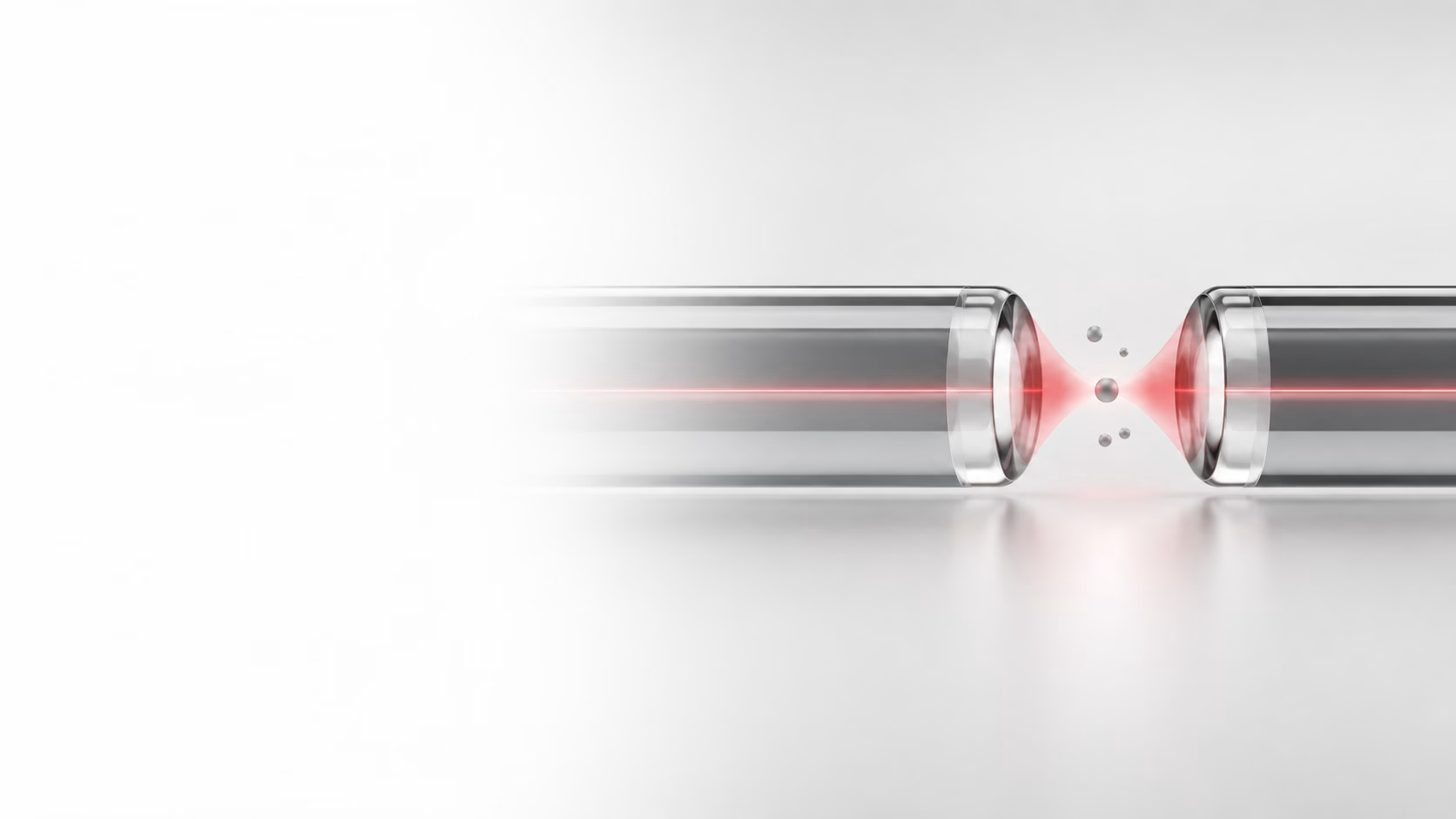
Mirega’s micro-cavity pushes this further: the same hundreds-of-meters effective path is achieved inside a cavity only a few millimeters long, because the mirrors are deposited directly on the polished tips of two optical fibers held a few hundred micrometers apart. The gas sample sits in that gap. Fewer molecules are needed, and the whole optical core shrinks to fit inside a handheld instrument.
| Approach | Physical length | Effective optical path |
|---|---|---|
| Single-pass spectroscopy | ~10 cm | ~10 cm |
| Conventional cavity (CEAS) | ~10 cm | Hundreds of meters |
| Mirega micro-cavity (MCEAS) | A few millimeters | Hundreds of meters |
Same enhancement, dramatically smaller size: many passes, more sensitivity, less sample volume.
Why micro-cavities?
Shrinking the cavity down to fiber scale is not just a packaging trick — it changes what the instrument can do.
Very small sample volume
The gas of interest only needs to fill the micrometer-scale gap between the two fiber tips, drastically reducing the volume required compared with conventional instruments.
Fast response
A low internal volume means the sample exchanges quickly, so the analyzer follows fast-changing concentrations instead of averaging them out.
High sensitivity
The cavity enhancement makes weak absorption features and low concentrations detectable, at a sensitivity level usually associated with much larger lab instruments.
Low power and compact integration
The small optical core needs less drive power and less supporting hardware, so it integrates into handheld and OEM designs rather than requiring a benchtop instrument.
Molecular selectivity
Tuning the laser to a molecule’s specific absorption line keeps the measurement selective, so the analyzer targets the gas of interest rather than a broad, ambiguous signal.
From a laboratory technique to an industrial sensor
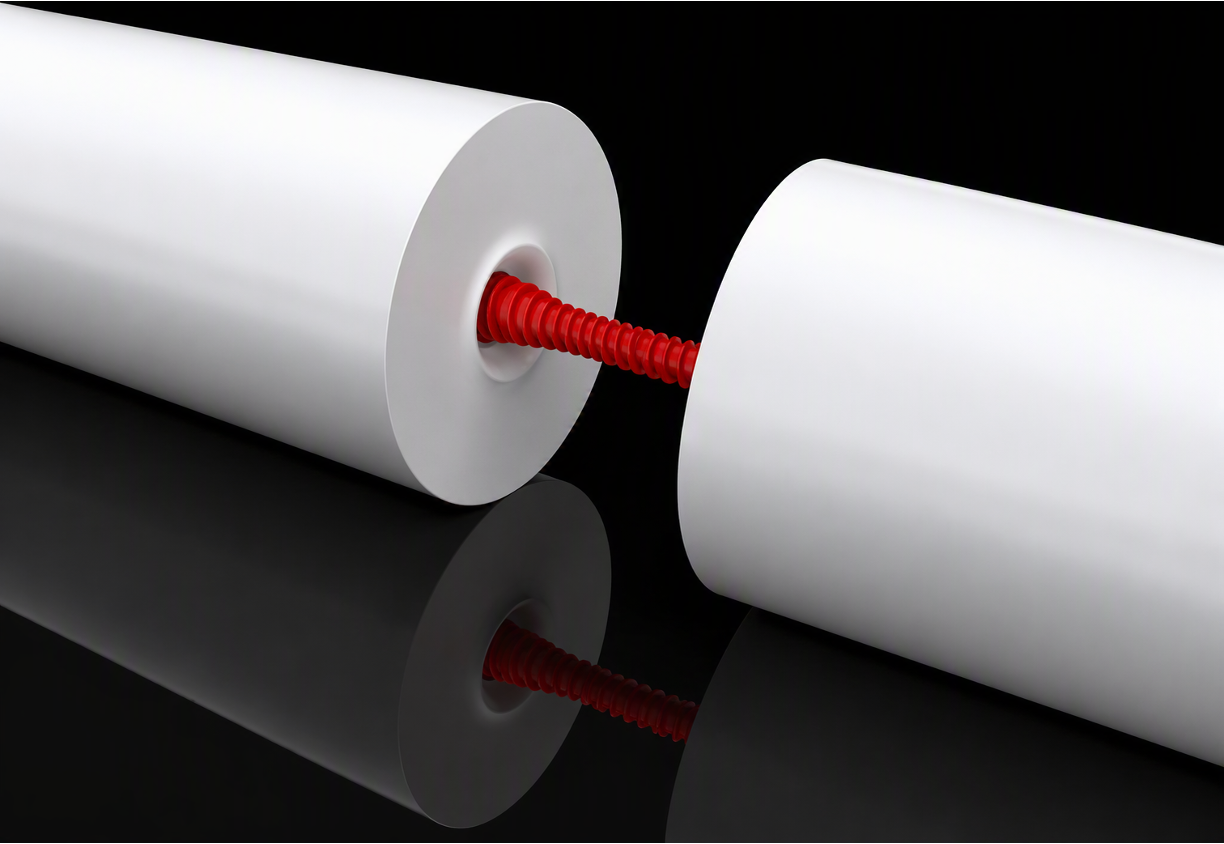
MCEAS did not start out as a product. The underlying micro-cavity was developed as a spin-off of the Atom Chips Group, in partnership with the Laboratoire Kastler Brossel (LKB), originally for quantum optics experiments where extreme finesse and a microscopic mode volume were the whole point.
Mirega holds a patent on the fiber-based micro-cavity design and has adapted it from a laboratory research tool into a manufacturable sensing core. The same micro-cavity platform underpins both this gas-sensing application and Mirega’s fiber Fabry-Perot tunable filters — two products built on one piece of shared, high-finesse optical hardware.
One technology, multiple gases
Changing the target molecule with MCEAS is a matter of which laser wavelength is addressed to the cavity, not a redesign of the optical core. CH₄ (methane) and CO₂ (carbon dioxide) are the two gases currently under active development, chosen because they cover the most immediate greenhouse-gas monitoring needs. The same micro-cavity architecture is designed to adapt to other molecules as new applications call for them.
Designed for applications where every milliliter matters
MCEAS opens up high-performance gas analysis in settings where a conventional cavity-enhanced instrument would simply be too big, too heavy, or need too much sample.
Dissolved gas analysis
Measuring gases such as CH₄ and CO₂ dissolved in water, with very low sample volumes.
Environmental monitoring
Compact, autonomous solutions for continuous greenhouse-gas monitoring in the field.
Airborne and mobile sensing
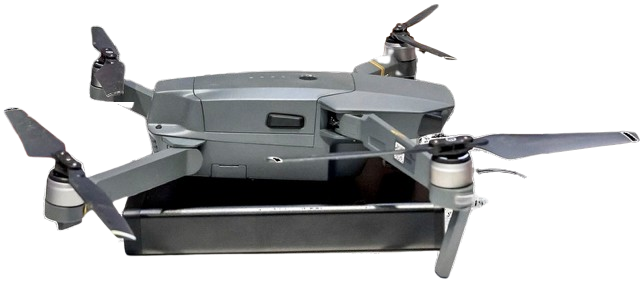
Low size, weight and power enable integration into drones and other mobile platforms.
Scientific instrumentation
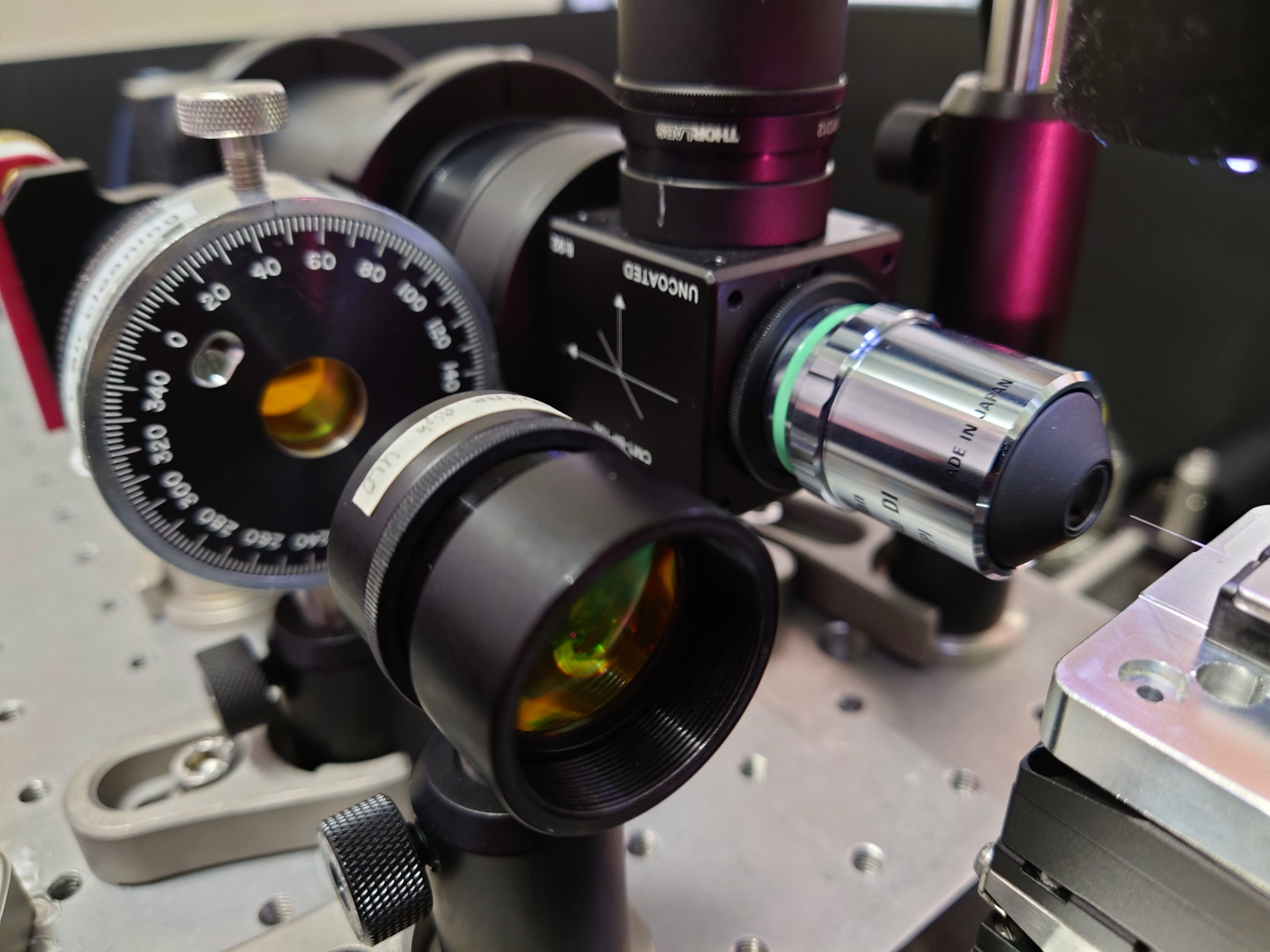
High-sensitivity measurements for research settings where the available gas sample is extremely limited.
OEM integration
A compact optical sensing core designed to be integrated into third-party instruments.
From micro-cavity to complete analyzer
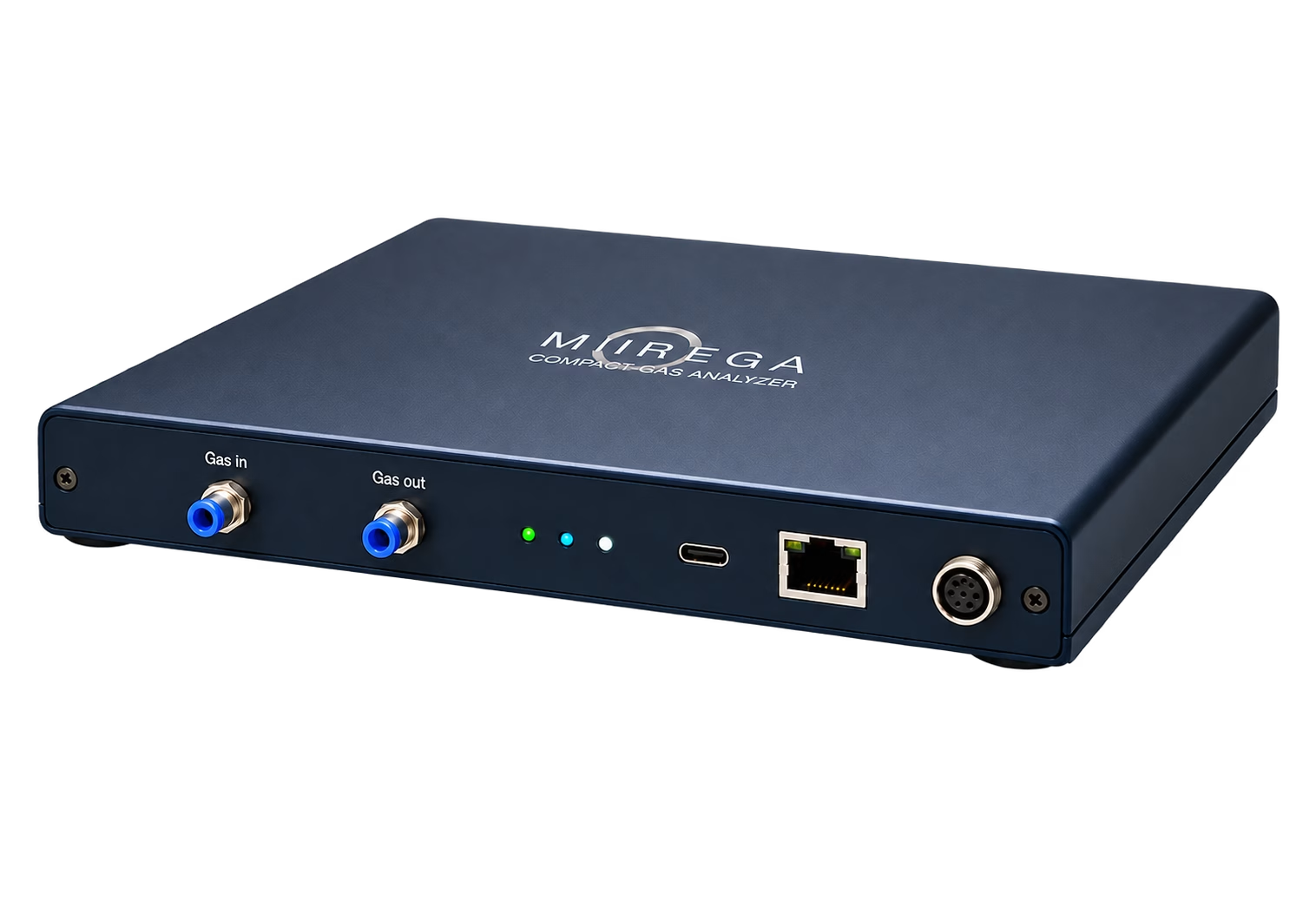
MCEAS describes the optical sensing principle at the heart of Mirega’s instruments, not a standalone product on its own. Built into a complete system — optics, laser, electronics and enclosure — it becomes the compact gas analyzer: available as a standalone instrument for handheld and field use, or as an OEM sensing module for integration into a third-party system.
Have an application requiring high sensitivity with a very small gas sample?
Talk to our team about your gas, concentration range, response time and integration requirements.